Whitepaper: The Integrated Growth Operating Model


Whitepaper: The Integrated Growth Operating Model
Growth becomes harder when every team optimises its own activity. Integration creates a shared commercial objective, clearer ownership and a faster path from insight to execution.
An integrated growth model starts with a simple premise: customers do not experience a company through its organisational chart. They encounter messages, people, partners, websites, events, marketplaces, proposals and service experiences. If those elements are disconnected internally, the buyer carries the cost of making sense of them.
This whitepaper sets out a practical way to connect those moving parts. It is not an argument for one department owning everything. It is a model for shared commercial planning, clearer hand-offs and common evidence.
The problem with functional optimisation
A marketing team can improve cost per lead while sales conversion falls. A partner team can recruit more resellers while few become active. A website can attract more traffic while the wrong audience grows fastest. Each function may appear productive while the commercial system as a whole becomes less efficient.
The integrated model therefore uses one hierarchy of outcomes. Functional metrics remain useful, but they sit underneath common commercial objectives. This creates a clearer conversation about trade-offs and stops teams defending local success when the overall result is weak.
Layer one: shared commercial direction
Leadership should define the markets, customer problems, revenue priorities and strategic bets that matter most. These choices need enough specificity to shape resource allocation. Statements such as 'grow awareness' or 'increase pipeline' are too broad to guide daily decisions.
A useful direction layer identifies priority segments, buying groups, geographic focus, route-to-market choices, offer priorities and the evidence the company must build. It also states what the organisation will not prioritise during the planning period.
Layer two: a connected demand system
Brand building and demand generation should reinforce each other. LinkedIn's B2B guidance distinguishes awareness from demand activity and continues to emphasise quality, trust and full-funnel thinking in 2026. The practical implication is that teams should not force every activity to produce an immediate lead.
Some work builds mental availability and credibility. Some captures existing demand. Some nurtures buying groups over time. A portfolio view makes those roles explicit and assigns the right measures to each.
Layer three: routes to conversion
Demand only creates value when buyers can progress. That requires useful sales conversations, relevant proof, clear commercial offers and procurement routes that match customer preferences. In technology markets this may include partners, distributors and cloud marketplaces as well as direct sales.
Conversion design should therefore include seller enablement, partner activation, marketplace readiness, proposal quality, onboarding and the removal of avoidable friction.
Layer four: an optimisation loop
Measurement should connect activity to behaviour and commercial movement, while acknowledging the limits of attribution. Teams need a regular rhythm for interpreting evidence and deciding what to scale, change or stop.
The most valuable output of reporting is not the number itself. It is the next decision. Build that expectation into weekly and monthly reviews.
How to implement the model in 90 days
Month one is about alignment and evidence. Agree commercial objectives, review customer insight, audit routes to market and establish baseline measures. Month two is about priority execution. Launch a small number of connected programmes, build the missing enablement and clean up reporting definitions. Month three is about optimisation. Compare outcomes against assumptions, reallocate resource and document the playbooks that should be repeated.
The model is deliberately modular. Smaller organisations can use one embedded team across several layers. Larger businesses can keep specialist functions and use the operating model to coordinate them.
90-day implementation checklist
- Agree three to five commercial objectives with owners.
- Map the buyer journey across marketing, sales, partner and marketplace touchpoints.
- Create one shared proposition and proof architecture.
- Align reporting definitions across marketing, CRM and finance.
- Run one monthly growth review focused on decisions, not presentations.
- Document what to scale, stop and test next.
Sources and further reading
- LinkedIn, brand and demand guidance
- LinkedIn, 2026 demand generation quality
- Google Analytics attribution guidance
This article is educational content, reviewed against the sources above on 26 September 2026. Platform features, regulations and market practices can change, so current source material should be checked before implementation.
D&A Services International works as an extension of internal teams across commercial growth, marketing, digital, channel and transformation. Start a conversation.

From Activity to Commercial Evidence: A Better Growth Dashboard

From Activity to Commercial Evidence: A Better Growth Dashboard
When reporting is dominated by channel metrics, leadership gets detail without clarity. The answer is not fewer metrics alone, but a stronger connection between activity, behaviour, pipeline and commercial outcomes.
Most businesses do not have a data shortage. They have a meaning shortage. Marketing platforms, CRM, finance systems, websites and partner reports all produce numbers, but the numbers often arrive in separate packs with different definitions and different time periods.
A commercial dashboard should reconcile those views into a decision system. It should help leadership see whether the strategy is working, where performance is changing and which assumptions now need attention.
Start with the decisions the dashboard must support
Different audiences need different levels of detail. A campaign manager may need creative performance and audience breakdowns. A CRO needs pipeline movement. A board needs a concise view of growth, efficiency, risk and the actions leadership is taking.
Design the reporting hierarchy from those decisions backwards. This keeps teams from filling the dashboard simply because a metric is available.
Separate leading indicators from outcomes
Revenue is important, but it arrives late. Teams also need signals that tell them whether they are moving in the right direction. Those may include target-account engagement, return visits, partner participation, meeting acceptance, opportunity stage movement or product trial activity.
Leading indicators should be chosen because they have a plausible relationship to the desired outcome, not because they look impressive.
Treat attribution as evidence, not absolute truth
Digital attribution can help compare touchpoints, but it is shaped by tracking limits, model choices and the fact that many B2B decisions happen across people and channels that are difficult to observe. Google Analytics, for example, supports data-driven and last-click reporting models, each of which assigns credit differently.
A mature reporting approach combines attribution with CRM evidence, sales feedback, controlled experiments where possible and trend analysis. The goal is better judgement, not false precision.
Make every report end with action
A dashboard should not finish with a chart. It should finish with a decision: increase, reduce, test, investigate, stop or scale. That is the point at which reporting becomes part of commercial management rather than a monthly reporting ritual.
Add a short commentary block that states what changed, why the team believes it changed, the confidence level of that explanation and what will happen next.
Practical checklist
- Agree one definition for qualified pipeline and key stages.
- Show leading and lagging indicators separately.
- Document important data gaps instead of hiding them.
- Add commentary and actions to every reporting cycle.
- Review whether each metric still informs a decision.
Sources and further reading
This article is educational content, reviewed against the sources above on 26 September 2026. Platform features, regulations and market practices can change, so current source material should be checked before implementation.
D&A Services International works as an extension of internal teams across commercial growth, marketing, digital, channel and transformation. Start a conversation.
Sales Enablement Is Not a Folder of Collateral

Sales Enablement Is Not a Folder of Collateral
Teams can produce dozens of decks, one-pagers and battlecards without improving conversion if the material is disconnected from real buyer questions and real stages in the sales process.
Sales enablement is frequently measured by what has been produced rather than what has become easier. A new pitch deck is useful only if sellers know when to use it, how to adapt it and what buyer concern it is designed to resolve.
Effective enablement combines information, process, coaching and feedback. It gives sellers a clearer view of the problem, a repeatable story, proof for different stakeholders and tools that support the next decision.
Build around buying moments
Instead of organising enablement by asset type, organise it around the customer journey. Early-stage material should help a buyer frame the problem and understand the cost of doing nothing. Mid-stage material should support comparison, stakeholder alignment and business-case development. Late-stage material should reduce implementation, procurement and commercial risk.
This approach makes it easier to spot gaps. A team may have plenty of awareness content but nothing that helps a technical evaluator, finance stakeholder or procurement team move forward.
Create a message architecture sellers can actually use
A message architecture should be short enough to remember. It needs the customer problem, the business outcome, the reason to believe and the proof. From that core, teams can create sector variants, persona variants and partner versions without reinventing the proposition.
Consistency matters because repeated exposure builds confidence. If the website, partner pitch, sales call and proposal tell four different stories, buyers have to work harder to understand what the company actually stands for.
Treat objections as product intelligence
Objections are not simply hurdles for salespeople to overcome. They are evidence about where the offer, proof or process is weak. If the same concern appears repeatedly, enablement should feed that insight back into proposition, product marketing, pricing or onboarding.
A practical objection library should record the concern, the underlying risk, the evidence that answers it and examples of where that evidence has worked.
Measure behaviour and outcomes
Asset downloads are weak evidence of enablement value. Better indicators include adoption by sales teams, time to first competent use, stage progression, conversion by opportunity type, sales-cycle length and the quality of CRM notes.
Qualitative feedback is equally useful. Ask sellers which asset changed a conversation, which buyer question is still difficult to answer and what they repeatedly build themselves because the official material is missing.
Practical checklist
- Map enablement assets to stages and stakeholder questions.
- Retire duplicate or outdated collateral.
- Create a short core message architecture.
- Capture recurring objections and the evidence used to answer them.
- Review sales feedback every month and update the system.
Sources and further reading
This article is educational content, reviewed against the sources above on 26 September 2026. Platform features, regulations and market practices can change, so current source material should be checked before implementation.
D&A Services International works as an extension of internal teams across commercial growth, marketing, digital, channel and transformation. Start a conversation.
Fractional Leadership: When to Buy Capability Instead of Adding Headcount

Fractional Leadership: When to Buy Capability Instead of Adding Headcount
The value is not a cheaper executive. It is access to experienced leadership that can diagnose, prioritise and deliver while the organisation retains flexibility.
Businesses often reach a point where growth creates more complexity than the existing structure can comfortably absorb. Marketing needs direction, sales needs enablement, partnerships need ownership, reporting needs discipline, and the founder or managing director becomes the integration point for everything.
A fractional leader can close that gap, but only if the remit is designed around outcomes. The model fails when the person is treated as a part-time adviser with no authority, no access to data and no delivery support. It works when they are embedded enough to make decisions, coordinate teams and turn plans into visible progress.
Start with the capability gap
Do not begin with a job title. Begin with the decisions the business is struggling to make and the work that is not moving. A fractional CMO remit might include proposition, campaign prioritisation, agency management and reporting. A fractional CRO remit may centre on pipeline, channel strategy, sales process and commercial partnerships.
This distinction prevents the engagement becoming a collection of ad hoc tasks. It also makes it easier to understand whether the right answer is one senior operator, a small embedded team or a permanent hire.
Senior thinking has to connect to delivery
One of the most common frustrations with external consultancy is the gap between recommendation and execution. A fractional model should close that gap. The leader needs enough delivery capacity around them to create assets, run campaigns, coordinate partners, improve systems and make the operating plan real.
That does not mean doing everything personally. It means remaining accountable for the outcome and ensuring that specialist work stays connected to the commercial objective.
Use the engagement to build internal capability
A good fractional leader should leave the organisation stronger, not dependent. Processes should become clearer, reporting should become more useful, internal teams should understand why priorities changed, and reusable systems should replace one-off heroics.
That capability transfer can include playbooks, campaign templates, pipeline definitions, partner motions, decision frameworks and coaching for existing leaders.
Know when the model should evolve
Fractional support may remain appropriate for years in some businesses, while in others it is a bridge to a permanent hire. Review the model against workload, strategic importance, management needs and the economics of the role.
The right question is not whether fractional is better than full-time. It is whether the business has the right level of leadership capability for the stage it is in.
Practical checklist
- Define the decisions the fractional leader owns.
- Give access to CRM, marketing, finance and partner data where relevant.
- Agree a weekly leadership cadence and a monthly commercial review.
- Separate strategic ownership from specialist execution capacity.
- Set a formal review point for whether the role should expand, reduce or become permanent.
Sources and further reading
This article is educational content, reviewed against the sources above on 26 September 2026. Platform features, regulations and market practices can change, so current source material should be checked before implementation.
D&A Services International works as an extension of internal teams across commercial growth, marketing, digital, channel and transformation. Start a conversation.
From Strategy to Revenue: Building a Go-to-Market System That Actually Executes

From Strategy to Revenue: Building a Go-to-Market System That Actually Executes
Many growth plans fail after the strategy workshop because nobody translates the choices into ownership, cadence, assets, partner actions and measurable next steps.
Go-to-market is often treated as a moment: a launch date, a campaign, a new website or a set of sales slides. In practice, the strongest go-to-market programmes behave more like operating systems. They define who the business is trying to win, why those buyers should care, how the offer reaches them, what evidence reduces risk, and what each commercial team does next.
The distinction matters because good strategy can still produce weak results when execution is fragmented. Marketing may optimise for engagement, sales may pursue whichever opportunities are most visible, channel teams may brief partners inconsistently, and leadership may only see activity totals. A functioning go-to-market system gives those groups a shared commercial language.
Start with the buying problem, not the product list
A strong proposition begins with the customer’s situation. What changed? What is costly, risky, slow or difficult today? Which stakeholders feel that problem differently? Product features only become persuasive when they are connected to those commercial consequences.
For technology businesses this is especially important because complex products can easily produce complex messaging. Buyers do not need every capability at the first touch. They need a reason to care, a credible explanation of the outcome and a low-friction next step.
Design the route to market around how customers actually buy
Direct sales is only one path. Depending on the market, growth may involve distributors, MSPs, resellers, cloud marketplaces, public-sector frameworks, alliance partners or product-led digital journeys. The commercial plan should make those paths explicit and decide where each route adds reach, trust, procurement simplicity or implementation capability.
That choice should also shape marketing. Partner-led routes need enablement, shared campaigns, clear incentives and evidence. Marketplace routes need listing quality, transaction readiness and seller activation. Direct enterprise routes need account insight, executive credibility and coordinated sales support.
Translate strategy into a 90-day execution system
The first 90 days should not attempt everything. Choose the smallest set of actions that tests the commercial thesis. That may mean refining two priority propositions, building one repeatable campaign, activating a small partner cohort and creating a shared reporting view.
Each action should have an owner, an expected leading indicator and a decision date. The purpose is not merely to complete tasks. It is to learn fast enough to improve the commercial model before budget and attention are spread too thinly.
Measure movement, not noise
Website sessions, social impressions and email opens can be useful diagnostics, but they are not the commercial story. Leadership needs to see movement through the system: target-account engagement, partner activation, qualified conversations, opportunity creation, progression, conversion, sales velocity and retained revenue where relevant.
The best reporting connects those outcomes back to the activity that influenced them, while being honest about attribution limits. That makes optimisation practical instead of cosmetic.
Practical checklist
- Name the two or three customer problems the offer solves best.
- Agree the priority audiences and buying groups.
- Document direct, partner and marketplace routes separately.
- Give every campaign a commercial objective, not just a channel metric.
- Review progress weekly and revise assumptions monthly.
Sources and further reading
This article is educational content, reviewed against the sources above on 26 September 2026. Platform features, regulations and market practices can change, so current source material should be checked before implementation.
D&A Services International works as an extension of internal teams across commercial growth, marketing, digital, channel and transformation. Start a conversation.
Home
UK & European Market Entry, Executed Properly
D&A Services International helps global technology vendors enter, scale and establish a credible presence across the UK and Europe through structured commercial, marketing and channel execution.
Market Entry Strategy
Pricing, positioning, target markets and go‑to‑market design aligned to the realities of the UK and European landscape.
Brand & Demand Creation
Executive‑grade content, campaigns and visibility that establish credibility and generate pipeline across the region.
Senior‑Led Execution
Delivery by experienced operators who have built and scaled international businesses — not junior account teams.
Structured. Disciplined. Accountable.
We work as an extension of your leadership team to reduce risk, accelerate traction and deliver a repeatable route to market across the UK and Europe.
Celebrating Excellence: National Diversity Awards 2024
Celebrating Excellence: National Diversity Awards 2024
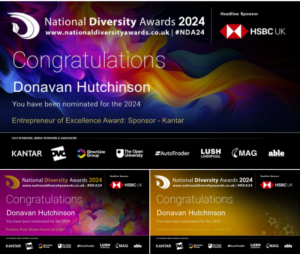
We are elated to share that Donavan Hutchinson, CEO and Founder of D&A Services International Ltd, has been nominated for not one, but three prestigious awards at this year’s National Diversity Awards 2024! 🎉
Why the National Diversity Awards Matter:
- These awards celebrate individuals, groups, and organizations whose commitment to enhancing equality, diversity, and inclusion is nothing short of inspirational.
- By recognising grass-root communities and their tireless efforts, the National Diversity Awards empower positive change across the UK.
- The awards honour outstanding work irrespective of race, faith, religion, gender, gender identity, sexual orientation, age, disability, or culture.
Our Excitement:
- Donavan Hutchinson’s nominations reflect our collective dedication to fostering a more inclusive world.
- As we stand alongside other nominees, we celebrate diversity, resilience, and the power of unity.
- Let’s continue championing equality and making a difference! 🏳️🌈
#NationalDiversityAwards #InclusionMatters #EqualityForAll

Donavan Hutchinson CEO and Founder of D&A Services International Ltd is Nominated for 5 CRN Women and Diversity in Channel Awards 2024
Donavan Hutchinson, the CEO and Founder of D&A Services International Ltd, has been nominated for five CRN Women and Diversity in Channel Awards in 2024. 🎉
- Executive Mentor of the Year
- Diversity Champion of the Year
- Role Model of the Year
- Manager of the Year
- Mental Health Champion of the Year
D&A Services International Ltd is an active company incorporated on February 7, 2023, with its registered office located in Sheffield, South Yorkshire. The company aims to partner with organisations across various sectors, offering DEI (Diversity, Equity, and Inclusion) as a Service and tailored tactical engagements. Their comprehensive services encompass recruitment support, cultural assessments, DEI-focused marketing and events, fundraising, and employee engagement12.
Congratulations to Donavan Hutchinson and D&A Services International Ltd on this well-deserved recognition! 🌟👏

D&A Services International Ltd are PROUD to be a member of the OutBritain Community
D&A Services International Ltd Joins OutBritain: A Commitment to Diversity, Equity, and Inclusion

Sheffield UK, May 2, 2024 – D&A Services International Ltd, a leading provider of Diversity, Equity, and Inclusion (DEI) Services, has proudly announced its membership with OutBritain, a dynamic organisation dedicated to empowering the British LGBTQIA+ business community.
About OutBritain
OutBritain envisions an economically empowered British LGBTQIA+ business community that inspires others. Their mission is to empower small business entrepreneurs and professionals, collaborate with non-profit advocates, and engage with business corporations and civic leaders to support policies fostering a more inclusive and welcoming business environment. The organisation recognises the economic vitality of the LGBTQIA+ community and aims to create a thriving ecosystem where everyone can thrive.
D&A Services International Ltd: A Commitment to DEI
At D&A Services International, we believe that diversity, equity, and inclusion are not just buzzwords; they are essential components of a successful business. Our comprehensive services encompass:
- Recruitment Support: We assist organisations in attracting diverse talent by implementing inclusive recruitment practices.
- Cultural Assessments: Our team conducts thorough assessments to identify areas for improvement and create a more inclusive workplace culture.
- DEI-Focused Marketing and Events: We help organisations communicate their commitment to diversity through targeted marketing campaigns and events. Our services encompass content management, Website management , Digital, Events, Voice and Video.
- Fundraising: Our expertise extends to fundraising initiatives that support causes aligned with DEI and CSR Objectives.
- Employee Engagement: We work closely with companies to foster an engaged and empowered workforce.
- Certification and Award Support: We work closely with companies to attain certifications supporting DEI efforts with ongoing support and management, events and content creation.
And much much more!
Excitement and Support
D&A Services International Ltd is thrilled to join OutBritain’s vibrant community. Our CEO, Donavan Hutchinson, expressed his enthusiasm:
“Becoming a member of OutBritain is a significant milestone for us. We are committed to driving positive change and promoting diversity in the business landscape. OutBritain’s mission aligns perfectly with our values, and we look forward to collaborating with other members to create a more inclusive and economically empowered environment.”
Conclusion
As D&A Services International Ltd embarks on this exciting journey with OutBritain, we reaffirm our dedication to fostering diversity, equity, and inclusion. Together, we can build a stronger, more vibrant business community that celebrates the richness of our differences.
For more information about D&A Services International Ltd, visit our website. To learn more about OutBritain and explore their member directory, visit OutBritain’s website.

D&A Services International Ltd Nominated for 3 Categories in the CRN 2024 Women and Diversity in Channel Awards
🎉 Celebrating Excellence in Diversity and Inclusion: D&A Services International Ltd Nominated for Three CRN 2024 Awards! 🎉
🌟 Health and Wellbeing Recognition Award D&A Services International Ltd has been nominated for the prestigious Health and Wellbeing Recognition Award. This category recognises companies that prioritise the physical and mental health of their employees. D&A Services International Ltd’s commitment to fostering a supportive and healthy work environment is commendable. Their initiatives, such as wellness programs, mental health resources, and flexible work arrangements, have positively impacted many organisations they thay have worked with. 🌈
🌟 Championing Diversity Award Diversity is not just a buzzword at D&A Services International Ltd; it’s a core value. Their commitment to promoting diversity across all levels of the organisation is inspiring. From recruitment practices that prioritise inclusivity to mentorship programs that empower underrepresented groups, D&A Services International Ltd leads by example.
🌟 LGBTQIA+ Champion Award D&A Services International Ltd’s unwavering support for the LGBTQIA+ community deserves applause. Our Founders are part of the LGBTQIA+ community and actively support and promote the community in every business engagement. They actively promote equality, advocate for LGBTQIA+ rights, and create a safe space for all employees. By fostering an inclusive environment, they empower individuals to bring their authentic selves to work.
🎊 Congratulations to All Nominees! We extend our heartfelt congratulations to all the other nominees in these categories. Your dedication to diversity, wellbeing, and inclusion is making a difference in the tech industry. Together, we can create a more equitable and vibrant channel community. 🙌
🌟 Wishing Success to All! As the awards draw near, we wish every nominee the best of luck. May your passion, hard work, and dedication be recognized and celebrated. Let’s continue to uplift each other and build a stronger, more diverse channel ecosystem. 🌟
#CRNAwards2024 #DiversityMatters #Inclusion #TechCommunity
For more information about the CRN Women & Diversity in Channel Awards 2024, check out the official longlist.1 🌟
About D&A Services International Ltd: D&A Services International Ltd, founded in February 2023, is a dynamic and forward-thinking company based in Sheffield, South Yorkshire, United Kingdom. Their commitment to diversity, wellbeing, and inclusion sets them apart in the tech industry.
Disclaimer: The information provided in this post is based on publicly available sources and does not constitute official endorsement or sponsorship.